BFF: How to Layer Aggregation, Cross-cutting, and Rendering
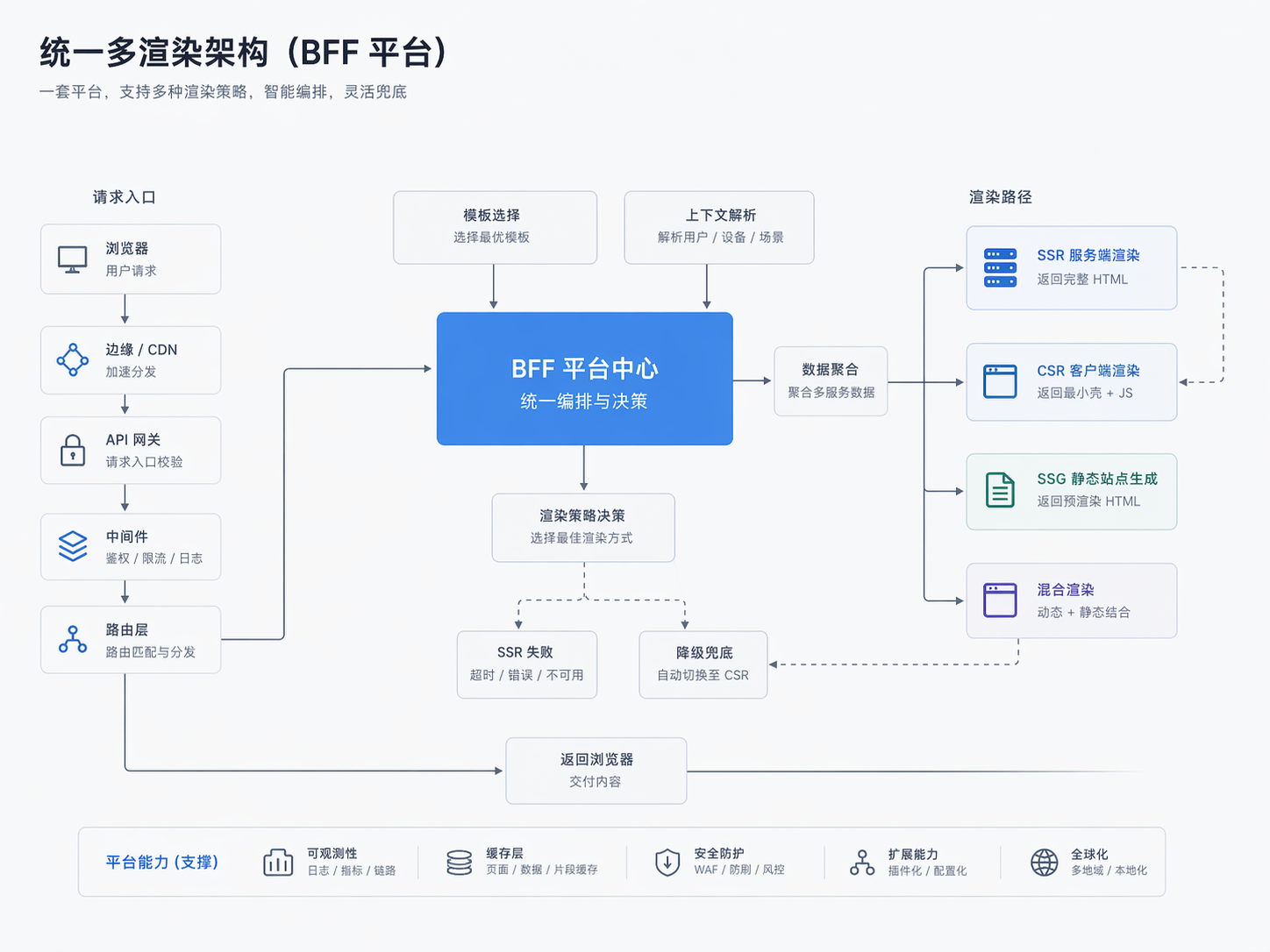
Many view BFF as just a Node proxy. Better: a server-side pipeline — static/module → site rules → data aggregation → initial screen → template renders HTML (SSR, streaming, fallback).
Gleaning bits of insight from the digital frontier

Many view BFF as just a Node proxy. Better: a server-side pipeline — static/module → site rules → data aggregation → initial screen → template renders HTML (SSR, streaming, fallback).

In complex business scenarios, page rendering is no longer a binary choice between SSR and CSR, but a system design issue concerning experience, stability, and engineering governance.

Treat merchant differences not as scattered conditional branches, but as objects that need governance.
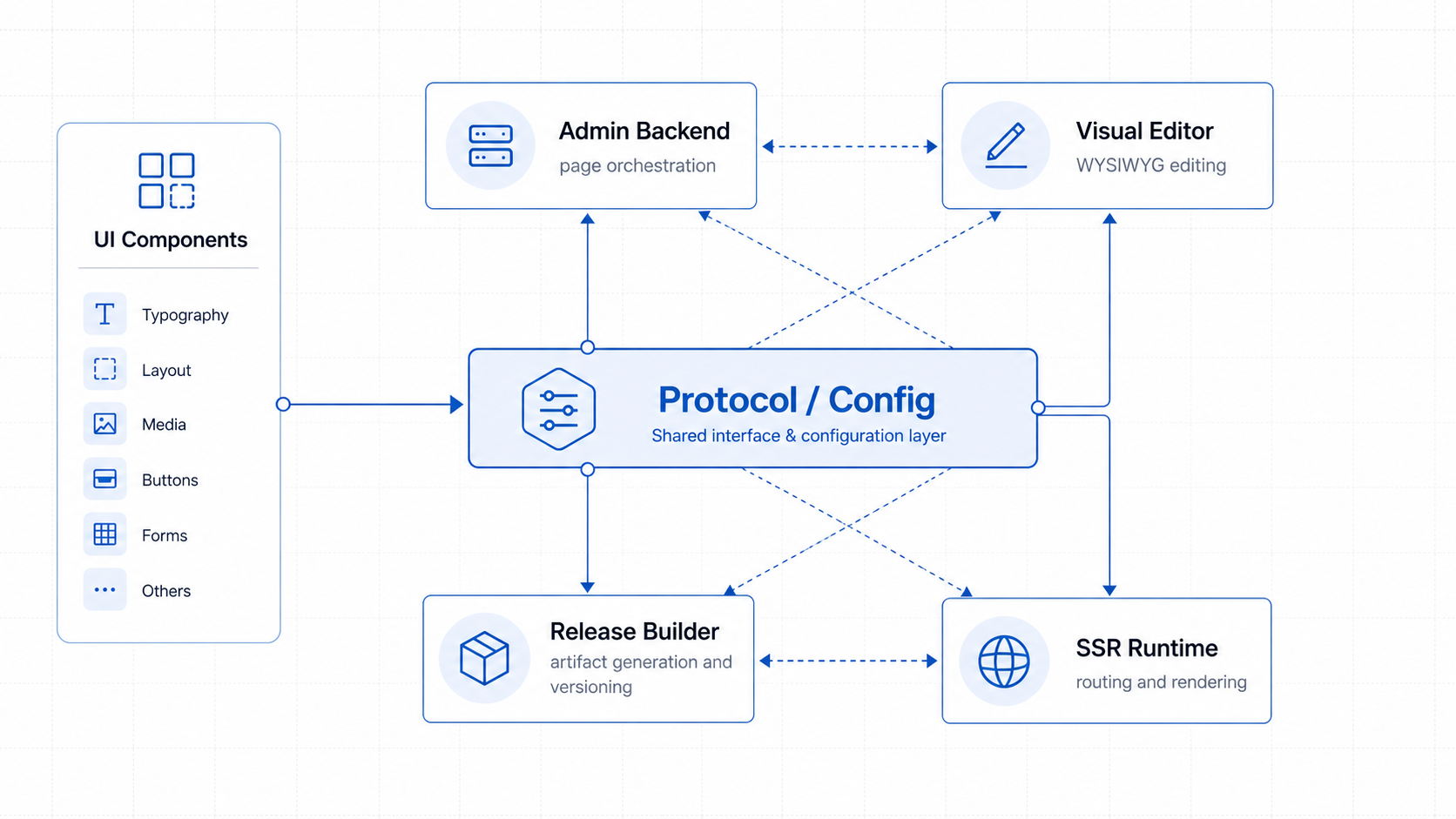
In MultipleSite, what truly stabilizes the entire chain is not React components or a backend page, but a protocol consumed by multiple subsystems.

Many teams go through a seemingly natural phase: build a React component library with buttons, carousels, etc., then expect page building to be solved as components increase.
A config-driven approach isn't about writing code into JSON but gathering scattered definitions into a page model. Menus, routes, permissions, breadcrumbs: one.